
01
Assess
Wound status
Wound Care
Coordinated wound-care support with clinician-led direction.
Request wound-care supportChronic or complex wounds requiring advanced dressing support.
Post-surgical, traumatic or pressure injuries needing structured care.
Those needing preventive management and early intervention.
Needing protocols, training support and dressing management guidance.
Seeking guidance for safe home-care and follow-up support.
A visual care map for assessment, VAC readiness, pressure protection and review.
Map
status
Treat
VAC
Guard
review
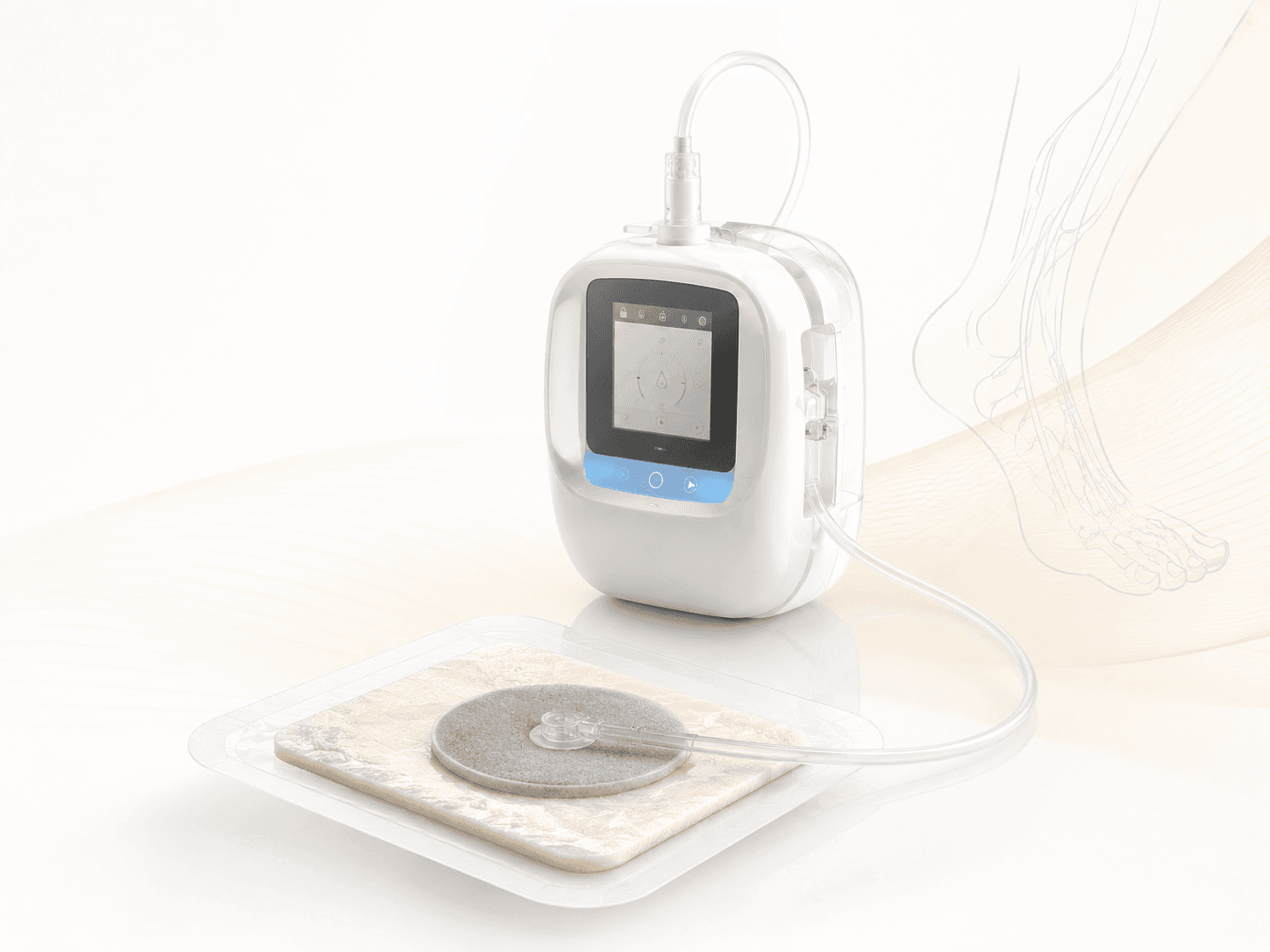
NPWT control point
Seal, pressure and protection move as one.
01
Wound status
02
Clean field
03
Therapy control
04
Pressure relief
05
Plan update
Negative Pressure Wound Therapy may support wound management in appropriately selected cases under qualified clinical supervision.
Learn about NPWT VACHelps manage wound fluid in selected cases.
Used within a qualified wound-care plan.
May support granulation in selected wounds.
Infection concerns need clinical assessment.
NPWT VAC dressing support, Dressing planning and follow-up workflow, Off-loading coordination for pressure-sensitive wounds, Care-pathway documentation and patient education support
Our care team is here to guide you at every step.